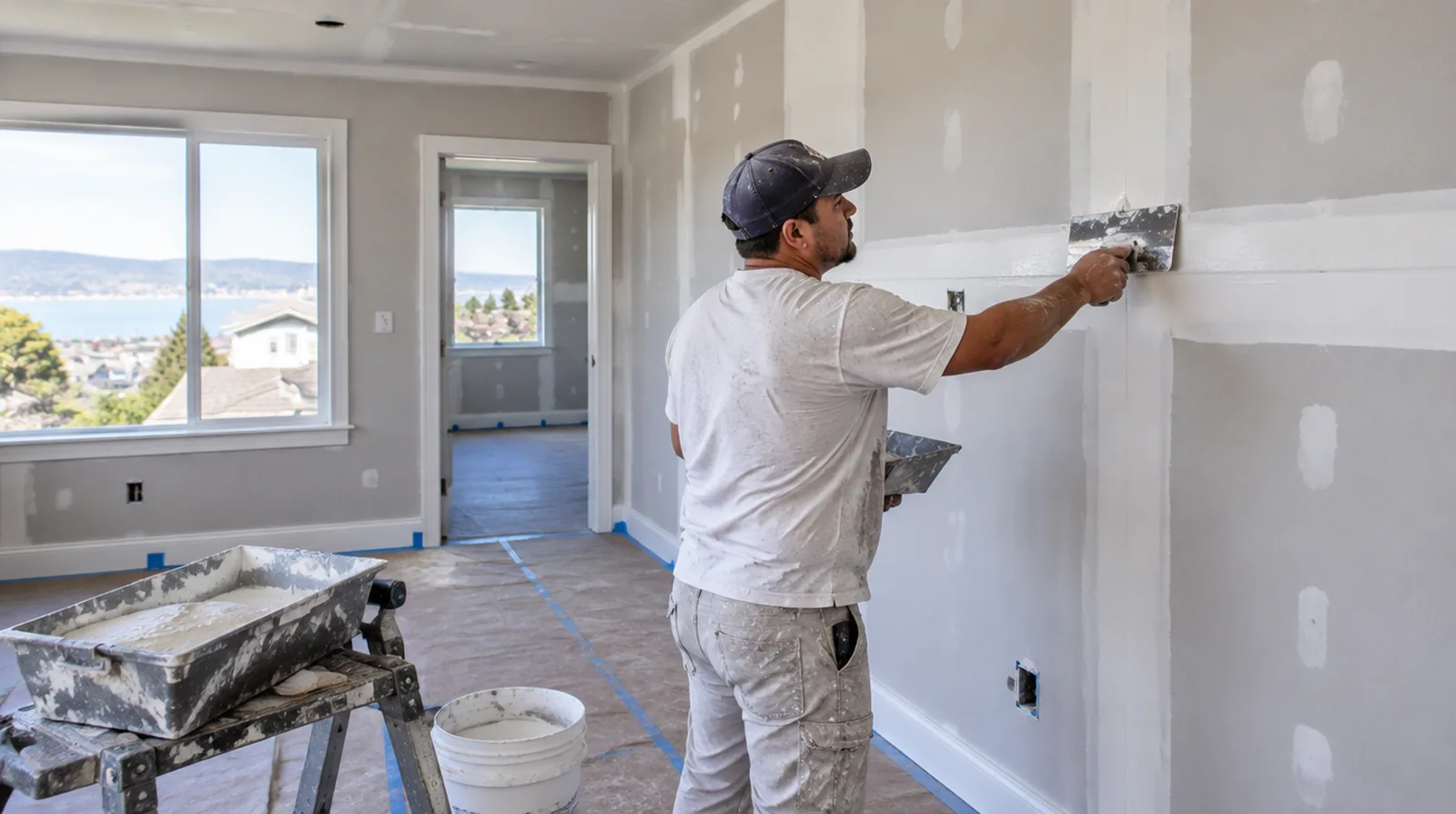
Hills, driveways and getting board inside
Plenty of Vallejo lots sit on a grade, with a garage below and the living space up a flight of stairs. Full sheets sometimes have to be carried around a side path rather than through the front door. Measuring the stair turn before ordering twelve-foot board saves a wasted delivery. Street parking near Sonoma Boulevard and the older blocks can be tight on weekdays, so the loading plan belongs in the first conversation.
Vallejo houses and the walls inside them
Vallejo grew in waves tied to Mare Island and the naval shipyard, so a single street can hold a 1920s bungalow beside a 1950s tract house. The older homes near the downtown grid and the Heritage District often still have lath and plaster upstairs while a kitchen or bath was redone in board decades later. That mix matters because a patch has to sit flush against two very different surfaces. Neighborhoods such as Glen Cove, Hiddenbrooke and the hills off Springs Road lean newer, with textured walls that were sprayed when the subdivision went up.
Bay air, fog and drying time
Air coming off San Pablo Bay and the Carquinez Strait keeps many Vallejo rooms cool and slightly damp for much of the year. Joint compound in a north-facing room can take noticeably longer to set than the bag suggests. Running a fan and keeping the heat modestly on is usually a better plan than rushing a second coat. Bathrooms on the windward side of a hill deserve a moisture-resistant board when they are opened up.
Early decisions
For an initial assessment from pictures, provide an overall room photograph and a detailed view of the defect so both context and scale are apparent.
If a household member is sensitive to dust, discuss containment and cleaning expectations before choosing how to stage the interior work.
Check the underlying repair
A decorative pattern will not reliably disguise a ridge or an uneven board joint underneath it. The base repair ought to be flat and firmly bonded before a decorative pattern is added.
Avoid rigid bridges
Resilient components can lose effectiveness when fasteners or fittings create unintended solid connections. Check fastener and attachment details against the system guidance instead of judging only the visible wall.
Coordinate ceiling junctions
Partition heads and suspended ceiling interfaces need a detail that suits movement and the assembly design. Respect required movement details and retain access to services that must remain maintainable.
Build the seam gradually
Make later joint coats progressively broader so the transition becomes less abrupt. Square cut sheet ends need particular care because they do not offer the recess of tapered factory edges.
Choose the final surface
A smooth ceiling and a new decorative texture involve distinct levels of preparation. A new patterned finish and a flat smooth ceiling can need substantially differing preparation.
Inspect concealed components
Insulation, electrical work and plumbing exposed during removal may require separate assessment or replacement. Those decisions should be resolved before the drywall portion of the repair moves forward.
About the illustrations
The website images are generated examples of drywall interiors and methods, not photographs of completed customer work. No customer reviews or qualifications are implied. The project form and the telephone shown on this page connect you with the next project conversation.
Explore the drywall services or view the address and map.
More planning details for Vallejo
Many Vallejo homes mix original lath and plaster with later drywall additions, so a repair often meets two very different wall surfaces. Check whether the patch area sits on plaster, board, or a transition between them before choosing materials. Bay air keeps some rooms cool and damp through winter, which slows compound drying more than people expect.