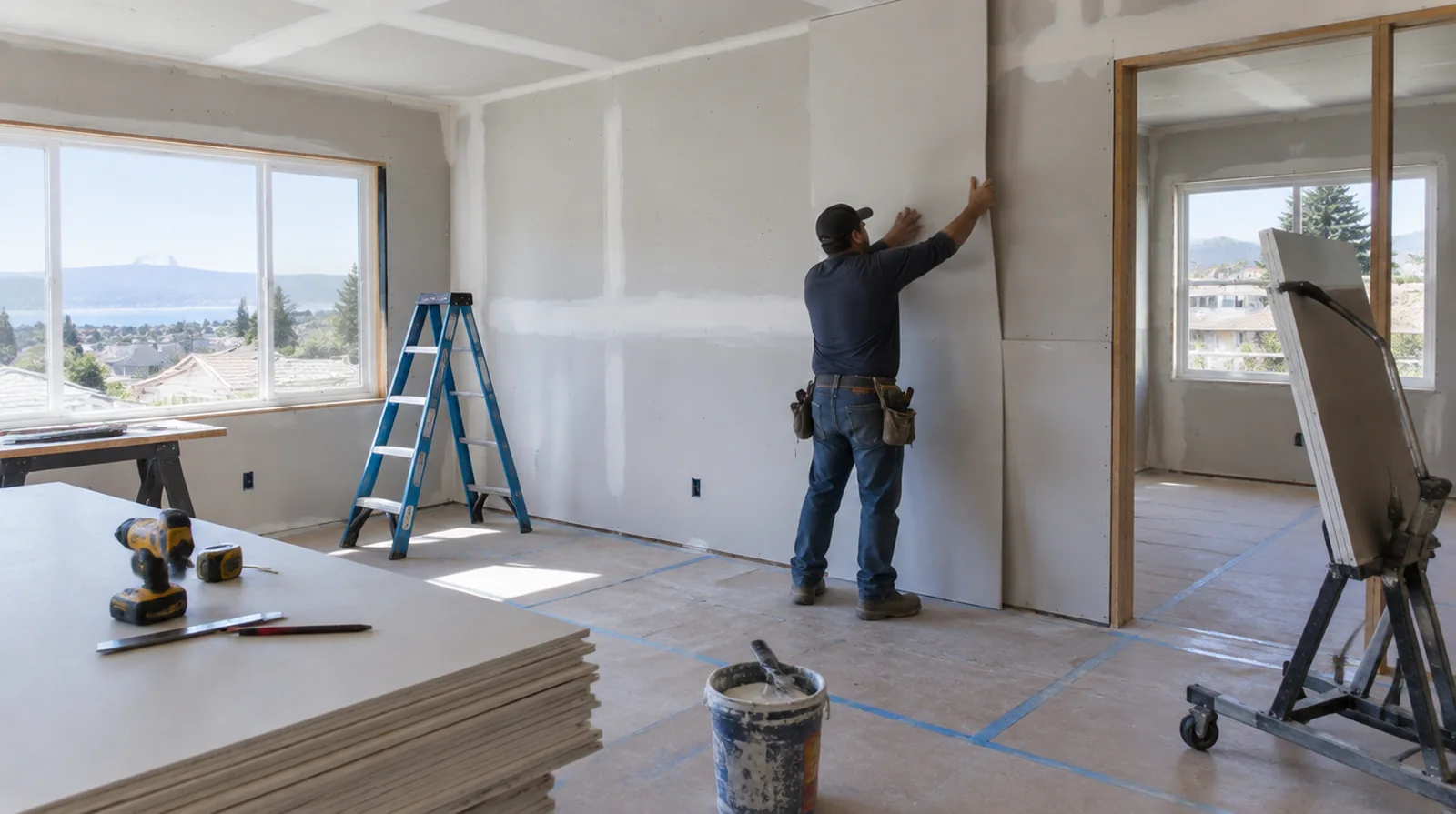
Control fastening depth
Proper fastening holds the gypsum securely while leaving its face paper intact. Repair overdriven fixings or inadequate edge support rather than expecting compound coats to conceal those defects. For an initial assessment from pictures, provide an overall room photograph and a detailed view of the defect so both context and scale are apparent.
Treat perimeter details
Connections to adjoining surfaces are part of the wall detail, not merely decorative gaps. The relevant fire or acoustic assembly may specify particular perimeter seals and treatments. When a quote includes multiple visits, ask what happens during each stage and when the room needs to remain undisturbed between coats.
Fit corners and openings
Door returns and exposed corners require a straight consistent edge before the final compound coats are applied. Select the exposed edge profile for the design and the level of contact it will receive. For a wall receiving a decorative covering, provide its preparation requirements early enough for the drywall finish to support that product.
Confirm concealed work
Wiring, plumbing and insulation inspections may need to happen before the cavity is closed. Photographs and a written readiness check help avoid opening a newly installed wall later. When the wall has strong reflected light, look at the full plane instead of judging only the narrow strip immediately beside the patch.
Plan deliveries and access
The route into the property places limits on sheet handling that the wall surface dimensions do not show. Difficult access could change labor and waste even when the interior itself is relatively small. For a surface carrying numerous paint layers, discuss whether differences in the retained profile or sheen justify decorating a broader area.
Lay out the joints
A thoughtful sheet layout limits awkward seams and keeps weak transitions away from the corners of openings. The installer should consider both panel support and the finishing work that follows. If the coating stability is unclear, assess which layers are adequately bonded and which should be removed rather than simply hidden beneath new material.
Measure the complete assembly
Board quantities depend on wall height, ceiling coverage, openings and the proposed orientation of the sheets. Planning the sheet arrangement can avoid thin strips and poorly positioned joints beside openings. When comparing competing estimates, make sure their protection, surface finish and disposal allowances describe equivalent work before comparing the final prices.
Inspect before decoration
The most useful final review happens after the surface is dry and before cabinets or wall coverings hide the edges. Use the agreed lighting and note any further preparation the painter should expect. If the problem developed after another renovation, explain which nearby materials or building systems changed before the damage became visible.
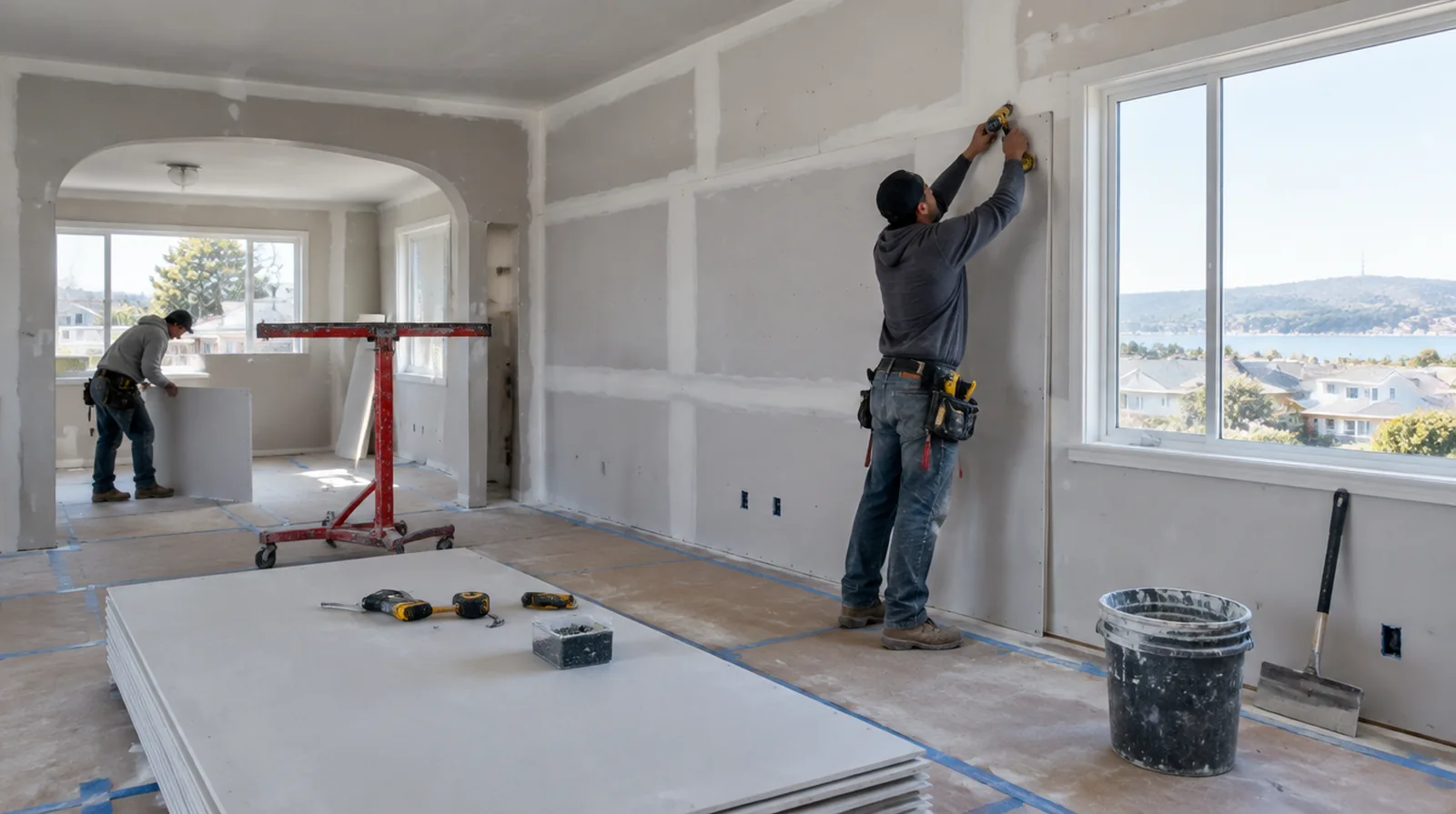
Define the finish level
A proposal should distinguish attached panels from a completed finish prepared for decorative coatings. The chosen sheen and grazing light conditions could call for a higher surface standard in a prominent room. If the surface condition is uncertain, allow for an assessment that can distinguish stable material from layers that ought not to be covered.
Sequence the finishing work
Joint treatment needs suitable conditions within the room and time between coats rather than a rushed pass over damp material. Review how ventilation and access will be maintained while other renovation work continues. If the completion date matters most, allow for intervals between coats as well as active labor instead of assuming the entire process happens continuously.
Project context in Vallejo
Ask whether the finish will be judged in that light. Older homes may also hide cloth-covered wiring behind walls, which should be looked at by an electrician before a cavity is closed.
Scope questions before finishing
For a room with restricted airflow, plan drying conditions alongside dust protection and the comfort of people occupying neighboring spaces.
For a wall receiving a decorative covering, provide its preparation requirements early adequate for the drywall finish to support that product.
When more damage could be hidden, ask how any added scope will be documented before extra material is removed or replaced.
If the finish paint is already chosen, share its sheen and color early because those choices influence how preparation of the surface is judged.
When a quote includes multiple visits, ask what happens during each stage and when the space needs to remain undisturbed between coats.
Where the quoted work stops before painting, request a clear description of what remains so the next decorating stage can be priced realistically.
When painting is outside the proposal, describe the remaining decorative preparation clearly so another contractor can price that stage accurately.
For a surface that will receive wall covering, share the product requirements early so the finishing stage supports the planned decorative treatment.
At an edge beside built in furniture, state whether the obstruction will be removed or whether finishing stops at the section that can be reached.
When the work area includes a doorway, check the clearance for panel movement as well as the amount of space available for finishing tools.
For a surface carrying numerous paint layers, discuss whether differences in the retained profile or sheen justify decorating a broader area.
When a paint contractor follows the drywall work, define the surface condition being handed over and decide who handles any minor final touch ups.
Explore the Vallejo drywall overview for related options, or read the project planning information before arranging the next stage.
More planning details for Vallejo
Many Vallejo homes mix original lath and plaster with later drywall additions, so a repair often meets two very different wall surfaces. Check whether the patch area sits on plaster, board, or a transition between them before choosing materials. Bay air keeps some rooms cool and damp through winter, which slows compound drying more than people expect.