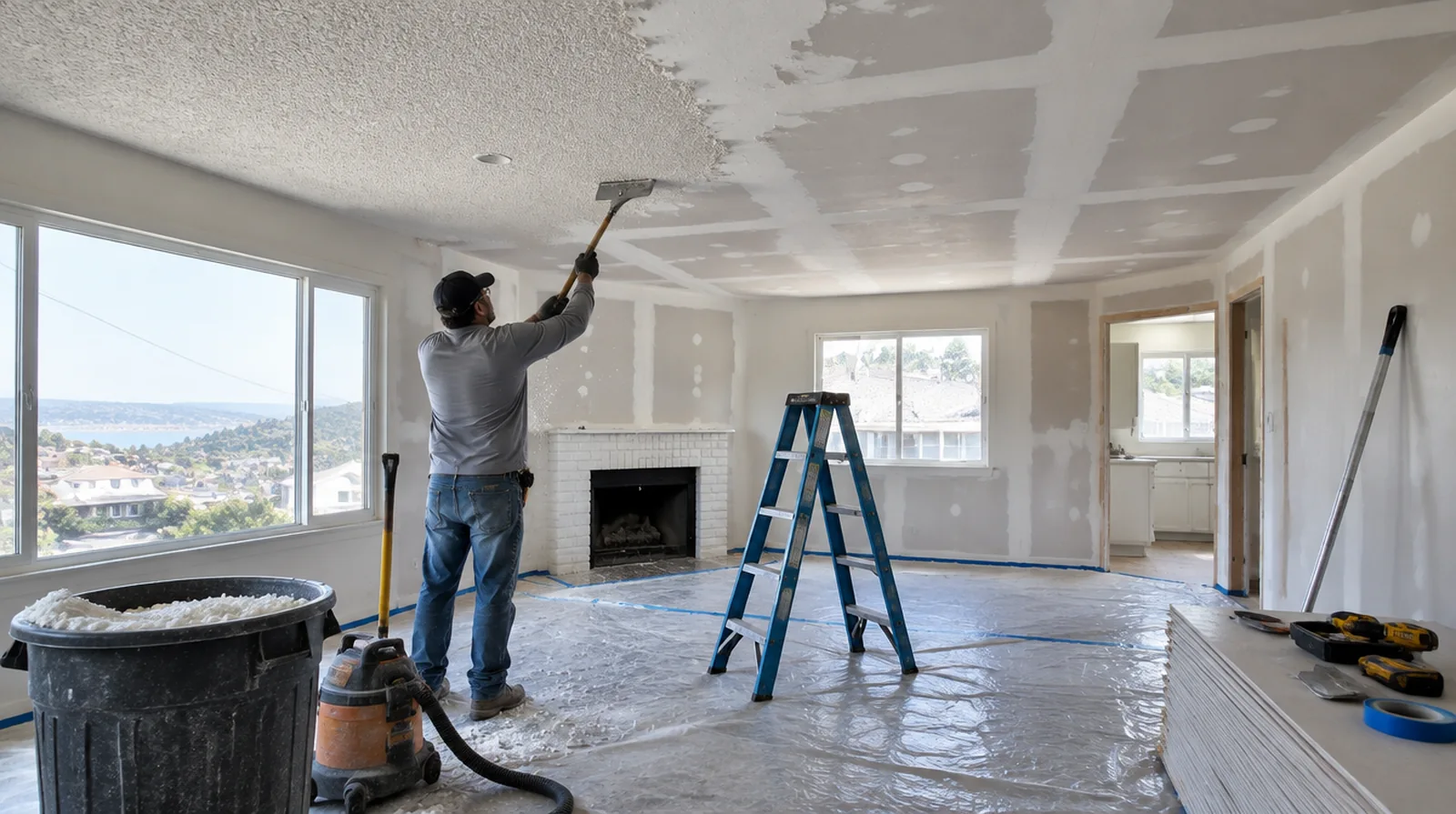
Establish material safety
Older textured ceiling coatings may contain asbestos and should not be scraped without appropriate evaluation. Arrange qualified testing where warranted and follow applicable requirements before disturbing the material. Before comparing two proposals, check that both include the same protection, finishing and cleanup boundaries rather than comparing totals alone.
Check for painted coatings
Paint over a textured coating may alter how readily the material releases. A small controlled assessment helps explain labor and potential damage to the supporting surface. For a room with restricted airflow, plan drying conditions alongside dust protection and the comfort of people occupying neighboring spaces.
Separate specialist work
Removal of a confirmed hazardous coating requires the relevant specialist process, not ordinary ceiling scraping. Have an suitable professional address containment, disposal and handling before subsequent drywall finishing is arranged. When panel replacement exposes a cavity, resolve any required inspection before that opening is closed and the surface finishing begins.
Confirm primer and paint
Plan compatible primer and paint for the exposed ceiling once repairs and finishing are dry. Define whether decoration is included or whether the drywall handover ends at preparation for coatings. When the same defect has returned, share information about previous repair methods so the next assessment can consider why they did not last.
Account for side lighting
When heavy texture is removed, side lighting may expose imperfections previously concealed by its relief. Broader finishing or a skim coat may be needed where the original surface was never intended to remain smooth. If the completion date matters most, allow for intervals between coats as well as active labor rather than assuming the entire process happens continuously.
Repair exposed imperfections
Scraping could reveal torn paper, dents and joint defects that need stabilization before a new finish. Discuss an allowance for those repairs before the decorative coating has been taken down. At a surface receiving strong window light, review a dried trial from the side in addition to the normal straight view of the wall.
Protect the entire room
Overhead coating removal can distribute debris throughout the room unless protection is comprehensive. Arrange masking, furniture relocation and a suitable removal route instead of covering only a small patch below. When the decorative coating has been selected, tell the finisher its intended sheen and color while the surface preparation standard is still being agreed.
Choose the final surface
A smooth ceiling and a new decorative texture involve different levels of preparation. Decide the intended appearance before pricing so the surface finishing supports the right result. For a distinctive existing pattern, retain a reference sample or detailed picture to make the matching discussion more specific.
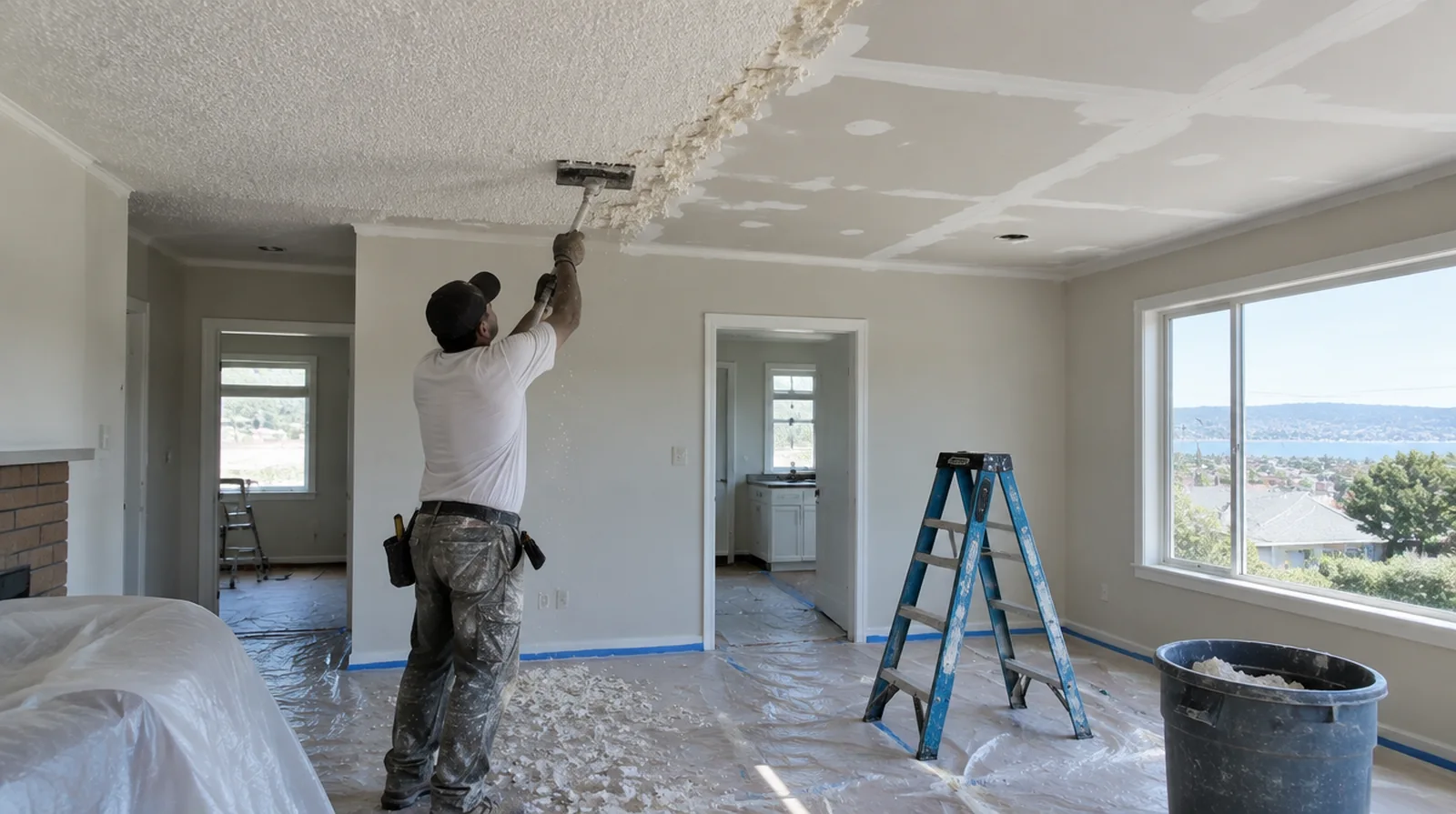
Plan cleanup and reopening
Allow for debris removal, drying and decorating rather than assuming the space is complete immediately after scraping. Allow for drying and painting time instead of assuming the space is usable immediately after scraping. At a ceiling or wall containing fittings, assign removal and reinstatement duties for the affected devices before repair access is needed.
Plan fixture coordination
Ceiling fittings may require qualified disconnection or other separate handling before access is available. Specify who will deal with lights, alarms and reinstatement instead of assuming those tasks are included. For a project with several trades, agree which inspection or handover point must happen before the next person starts work.
Project context in Vallejo
Check whether the patch area sits on plaster, board, or a transition between them before choosing materials. On sloped streets, plan where a truck can stop and how full sheets reach the front door without crossing a wet lawn.
Scope questions before finishing
When panel replacement exposes a cavity, resolve any required inspection before that opening is closed and the surface finishing begins.
When the protected room includes a doorway, check the clearance for panel movement as well as the amount of space available for finishing tools.
If the finish paint is already chosen, share its sheen and color early because those choices influence how substrate preparation is judged.
If the space will remain occupied, identify a practical separation between the protected room and the space that still needs daily access.
For work spread across distinct planes, record their dimensions separately and describe the boundary of the treatment on each surface.
When the decorative coating has been selected, tell the finisher its intended sheen and color while the surface preparation standard is still being agreed.
When concealed damage is possible, establish how additional findings and any proposed removal will be recorded before the scope changes.
When painting is outside the proposal, describe the remaining decorative preparation clearly so another contractor can price that stage accurately.
When the wall surface has strong reflected light, look at the full plane rather than judging only the narrow strip immediately beside the patch.
When photographs are used for an initial discussion, include a wide room view as well as a close view so scale and surrounding finishes are understandable.
In a room with little free floor space, identify temporary storage for belongings and establish adequate clearance for the work before delivery.
If the surface condition is uncertain, allow for an assessment that can distinguish stable material from layers that should not be covered.
Explore the Vallejo drywall overview for related options, or read the project planning information before arranging the next stage.
More planning details for Vallejo
Many Vallejo homes mix original lath and plaster with later drywall additions, so a repair often meets two very different wall surfaces. Bay air keeps some rooms cool and damp through winter, which slows compound drying more than people expect. A living room wall facing the strait can get low raking light late in the day, which reveals ridges that look fine at noon.