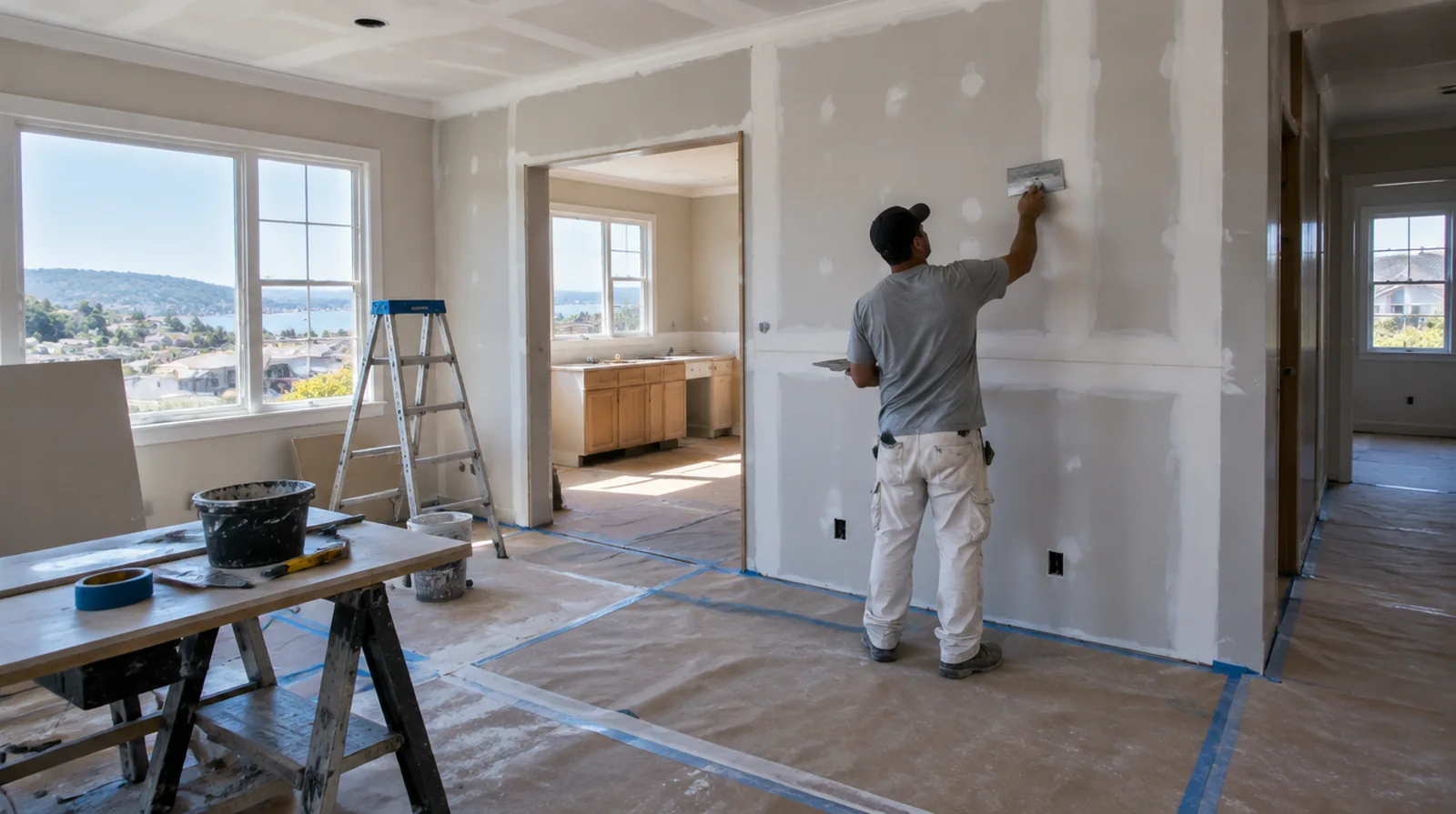
Allow time before painting
Let a new texture become ready for decoration rather than applying paint onto soft material. The quote should explain whether the next decorating stage is included or left to a painter. Where a finished perimeter is prominent, decide whether trim stays in position or is removed before agreeing how the new surface meets that edge.
Study the paint layers
Older paint coats may have filled or rounded the original texture profile. Matching the wall surface as it looks now can require a different application from the pattern that was first installed. If a household member is sensitive to dust, discuss containment and cleaning expectations before choosing how to stage the interior work.
Control application conditions
Spray settings, material consistency and working distance all influence the resulting texture. A knockdown pass also depends on when the applied material reaches the right condition in that room. At an edge beside built in furniture, state whether the obstruction will be removed or whether finishing stops at the section that can be reached.
Protect surrounding finishes
Mask adjacent materials against sprayed compound and other application debris. The protection plan should cover the actual application area rather than only the original hole. For a limited patch requiring substantial setup, assess the complete package of access and protection rather than relating cost only to the opening size.
Blend beyond the patch
An abrupt rectangular texture boundary often draws attention even when the pattern itself is close. Gradually extending the texture into the surrounding surface may make the blend less abrupt. When comparing competing estimates, make sure their protection, surface finish and disposal allowances describe equivalent work before comparing the final prices.
Use appropriate primer
New texture and adjacent painted material can absorb finish coats at different rates. Choose suitable primer to support the coating system without unnecessarily flattening the intended pattern. Where existing floors will remain, specify protective measures and review the path used by panels, equipment and finishing tools.
Consider hand applied surfaces
Troweled textures need attention to tool direction, pressure and spacing between repeated shapes. A representative trial is useful when there is no standard machine setting that reproduces the existing finish. For a distinctive existing pattern, retain a reference sample or detailed picture to make the matching discussion more specific.
Check the underlying repair
A matching texture cannot hide a raised patch edge or a panel that sits proud of the wall surface. Complete a stable level repair before trying to reproduce the surrounding texture. If materials must cross common building areas, plan the protection and access route so other occupants are not needlessly obstructed by deliveries.
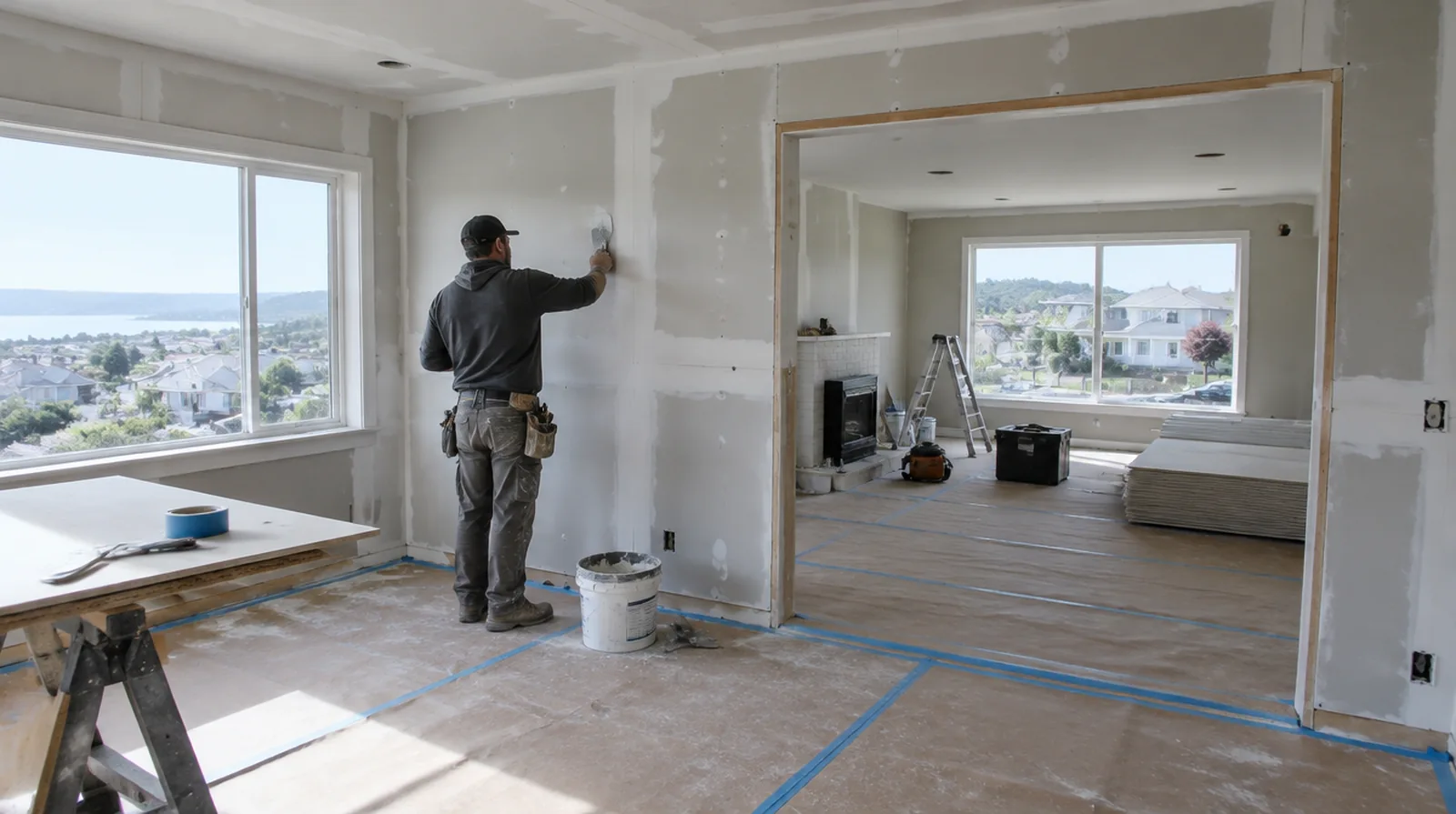
Identify the existing pattern
First determine how the current texture creates its pattern and relief. Examine the surface in the light the interior actually receives before choosing a spray or hand applied method. At a repair beside an opening, allow clearance for moving board through the doorway and space to use the finishing tools effectively.
Judge from normal positions
Close inspection of a wet sample is less useful than reviewing the dry finish from ordinary room viewpoints. Include side lighting and the planned paint sheen when deciding whether the result meets the agreed scope. When concealed damage is possible, establish how additional findings and any proposed removal will be recorded before the scope changes.
Project context in Vallejo
On sloped streets, plan where a truck can stop and how full sheets reach the front door without crossing a wet lawn. Older homes may also hide cloth-covered wiring behind walls, which should be looked at by an electrician before a cavity is closed.
Scope questions before finishing
For a project with several trades, agree which inspection or handover point must happen before the next person starts work.
For an initial assessment from pictures, provide an overall room photograph and a detailed view of the defect so both context and scale are apparent.
Where flooring is staying in place, agree on protective coverings and check that tools and material handling will not damage the visible finish.
When a paint contractor follows the drywall work, define the surface condition being handed over and decide who handles any minor final touch ups.
Where a future fixture will be installed, coordinate any required backing while the cavity is accessible rather than reopening the completed wall.
Where a finished perimeter is prominent, decide whether trim stays in position or is removed before agreeing how the new surface meets that edge.
Where light reflects along the wall, inspect the complete plane instead of limiting the review to the edge immediately next to the repaired section.
For an older repair with no clear history, describe when the mark first appeared and whether it has changed through more than one season.
At a surface receiving strong window light, review a dried trial from the side in addition to the normal straight view of the wall.
If scheduling is the main concern, separate hands on labor from drying intervals instead of treating every visit as a full day of active work.
When a wall has repeated defects, keep a record of earlier repair attempts so a new assessment does not simply repeat an unsuccessful approach.
For a planned new wall mounted fixture, resolve its backing requirements while the cavity remains open instead of cutting into completed drywall later.
Explore the Vallejo drywall overview for related options, or read the project planning information before arranging the next stage.
More planning details for Vallejo
Many Vallejo homes mix original lath and plaster with later drywall additions, so a repair often meets two very different wall surfaces. Check whether the patch area sits on plaster, board, or a transition between them before choosing materials. Bay air keeps some rooms cool and damp through winter, which slows compound drying more than people expect.