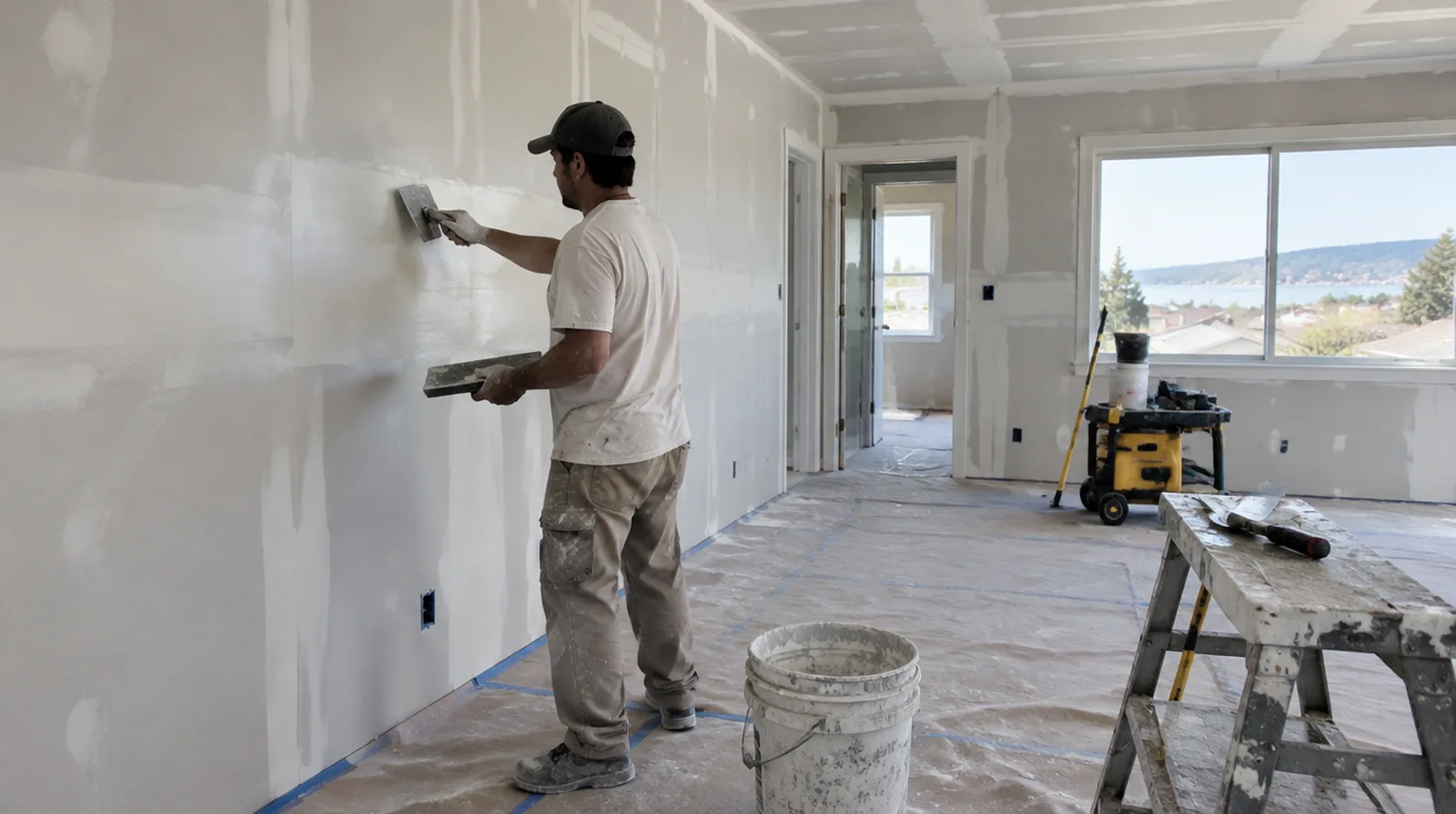
Clean and prepare the wall
Adhesion can be compromised by dirt, oil or residues left on the old coating. Preparation may include cleaning and a suitable bonding treatment based on the condition of the original surface. If the problem developed after another renovation, explain which nearby materials or building systems changed before the damage became visible.
Inspect using side light
A surface can appear even under direct lighting while revealing shallow tool lines from the side. The review should reflect the conditions that will matter when the space returns to everyday use. If the problem developed after another renovation, explain which nearby materials or building systems changed before the damage became visible.
Apply controlled thin layers
A skim coat is intended to refine the surface rather than build a heavy unsupported layer. Deeper texture may require successive passes to level low spots without overloading the high points. When reviewing the finished work, use the agreed lighting and natural room viewpoints so the assessment reflects the intended use of the space.
Refine with minimal sanding
Careful application limits how much abrasive refinement is needed later. Dust control should still be planned because broad wall work may create fine airborne particles. When the wall has strong reflected light, look at the full plane instead of judging only the narrow strip immediately beside the patch.
Define the smoothing target
Flattening a light texture is different from correcting deep waves across an entire wall. Describe the expected improvement and any retained wall variation in the agreed finish scope. Where a neat final edge matters, agree whether the finish ends against existing trim or whether that trim will be removed and replaced.
Choose paint with the finish
Higher sheen coatings can emphasize small variations that a matte finish makes less obvious. Connect the paint selection to the agreed preparation standard before deciding how extensive the skim work should be. Where existing floors will remain, specify protective measures and review the path used by panels, equipment and finishing tools.
Stabilize torn paper
Exposed drywall paper can bubble when it receives wet compound without suitable preparation. Damaged spots need an appropriate sealing approach before the broad compound coats are applied. At a repair beside an opening, allow clearance for moving board through the doorway and space to use the finishing tools effectively.
Assess the existing coating
A thin new finish depends on the strength of the coating that will remain underneath it. The assessment should distinguish a sound but uneven surface from one that is actively peeling. If the proposal requires return visits, identify the purpose of each stage and the intervals during which finishing material needs to remain undisturbed.
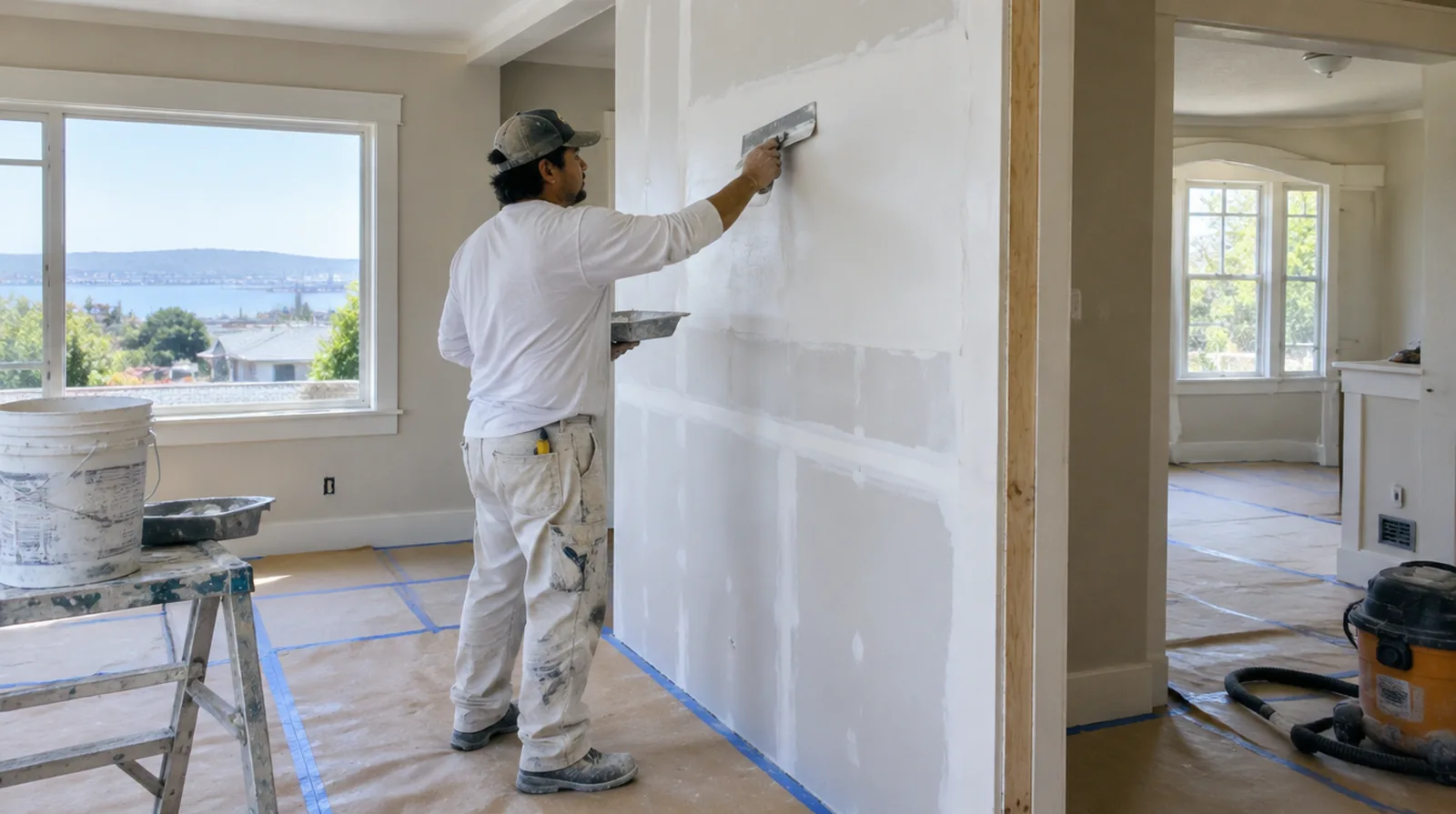
Let each coat dry
Room temperature, humidity and airflow influence drying interval across a broad coated surface. A rushed next coat can drag or disturb material that has not set up sufficiently. For a room with restricted airflow, plan drying conditions alongside dust protection and the comfort of people occupying neighboring spaces.
Check underlying movement
A skim coat improves the surface profile but does not repair structural movement or unstable board. Recurring cracks should be investigated and reinforced appropriately before the finish is covered. If the current finish is unusual, keep a small reference sample or a close photograph to support the discussion about blending and restoration.
Project context in Vallejo
Check whether the patch area sits on plaster, board, or a transition between them before choosing materials. Many Vallejo homes mix original lath and plaster with later drywall additions, so a repair often meets two very different wall surfaces.
Scope questions before finishing
If access passes through a shared space, arrange protection and a delivery route that do not unnecessarily obstruct other occupants.
Where the quoted work stops before painting, request a well defined description of what remains so the next decorating stage can be priced realistically.
For work spread across differing planes, record their dimensions separately and describe the boundary of the treatment on each surface.
If the proposal requires return visits, identify the purpose of each stage and the intervals during which finishing material needs to remain undisturbed.
If a distinct painter completes decoration, agree the condition of the handed over surface and assign responsibility for small final corrections.
For a repair that crosses several surfaces, measure the affected planes separately so the estimate can explain where each finishing treatment starts and stops.
If the completion date matters most, allow for intervals between coats as well as active labor rather than assuming the entire process happens continuously.
For a project involving a building manager, confirm access hours and protection requirements before promising a start date or a short completion window.
Where a surface has been painted many times, consider whether differences in texture or sheen will require a wider decorative treatment.
For an initial assessment from pictures, provide an overall room photograph and a detailed view of the defect so both context and scale are apparent.
When a wall has repeated defects, keep a record of earlier repair attempts so a new assessment does not simply repeat an unsuccessful approach.
For a room with restricted airflow, plan drying conditions alongside dust protection and the comfort of people occupying neighboring spaces.
Explore the Vallejo drywall overview for related options, or read the project planning information before arranging the next stage.
More planning details for Vallejo
Bay air keeps some rooms cool and damp through winter, which slows compound drying more than people expect. On sloped streets, plan where a truck can stop and how full sheets reach the front door without crossing a wet lawn. A living room wall facing the strait can get low raking light late in the day, which reveals ridges that look fine at noon.