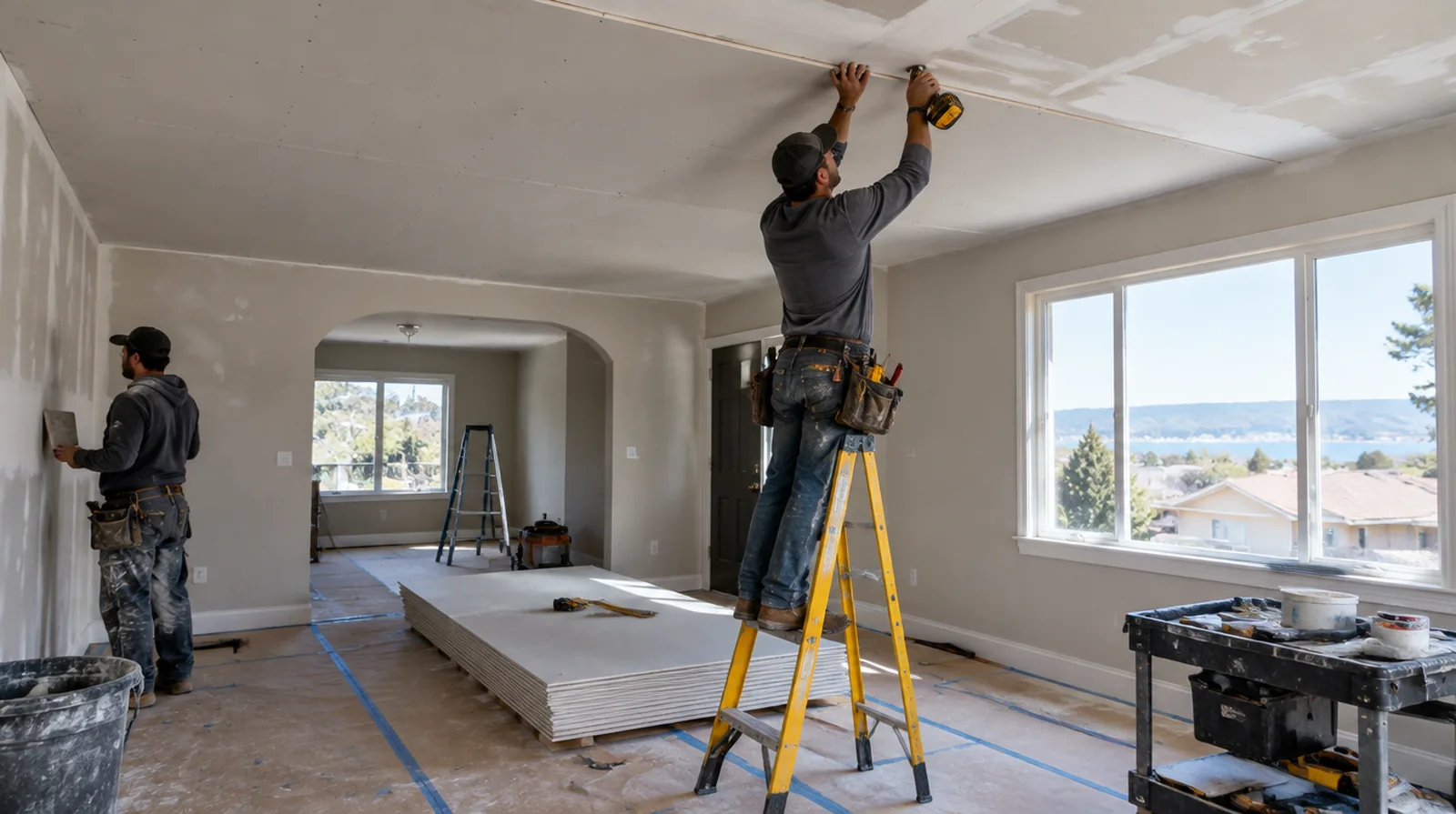
Evaluate sagging sections
A drooping panel requires an assessment of fastening, support and material condition rather than a surface skim alone. Keep people away from an unstable area while the suitable professional evaluates it. For a room that stays in use, set a workable boundary around construction while retaining the access people need for normal daily activities.
Cut back to sound material
Water softened gypsum and loose edges do not provide a dependable base for a new patch. The removal boundary should reach stable material and allow the replacement to be properly supported. When the decorative coating has been selected, tell the finisher its intended sheen and color while the surface preparation standard is still being agreed.
Treat the joints overhead
Reinforce the ceiling patch joints and taper the finishing layers well beyond their edges. Overhead seams can be conspicuous because windows often send light almost parallel to the ceiling. If a household member is sensitive to dust, discuss containment and cleaning expectations before choosing how to stage the interior work.
Review the room after drying
Once the coats are dry, view the ceiling from normal room positions and near its principal windows. Identify outstanding paint preparation while protection and access are still available. For a project involving a building manager, confirm access hours and protection requirements before promising a start date or a short completion window.
Set the repainting scope
A small fresh white patch can stand out against an older ceiling even when the surface is level. Painting to a natural boundary may be preferable to touching up only the repair. Where existing floors will remain, specify protective measures and review the path used by panels, equipment and finishing tools.
Address isolated stains
A dry repaired ceiling may still need a compatible stain blocking primer before decorative paint. Verify that the source is no longer active instead of treating primer as a remedy for damp material. For a planned new wall mounted fixture, resolve its backing requirements while the cavity remains open instead of cutting into completed drywall later.
Identify the existing surface
A ceiling may contain gypsum board, plaster or several layers from earlier renovations. The repair method should match the actual construction instead of assuming every white surface is drywall. For an initial assessment from pictures, provide an overall room photograph and a detailed view of the defect so both context and scale are apparent.
Check the source of damage
A noticeable overhead mark may be evidence of a problem in a service or space above the interior. The cause needs resolution before cosmetic repair can reasonably be expected to last. When the wall has strong reflected light, look at the full plane rather than judging only the narrow strip immediately beside the patch.
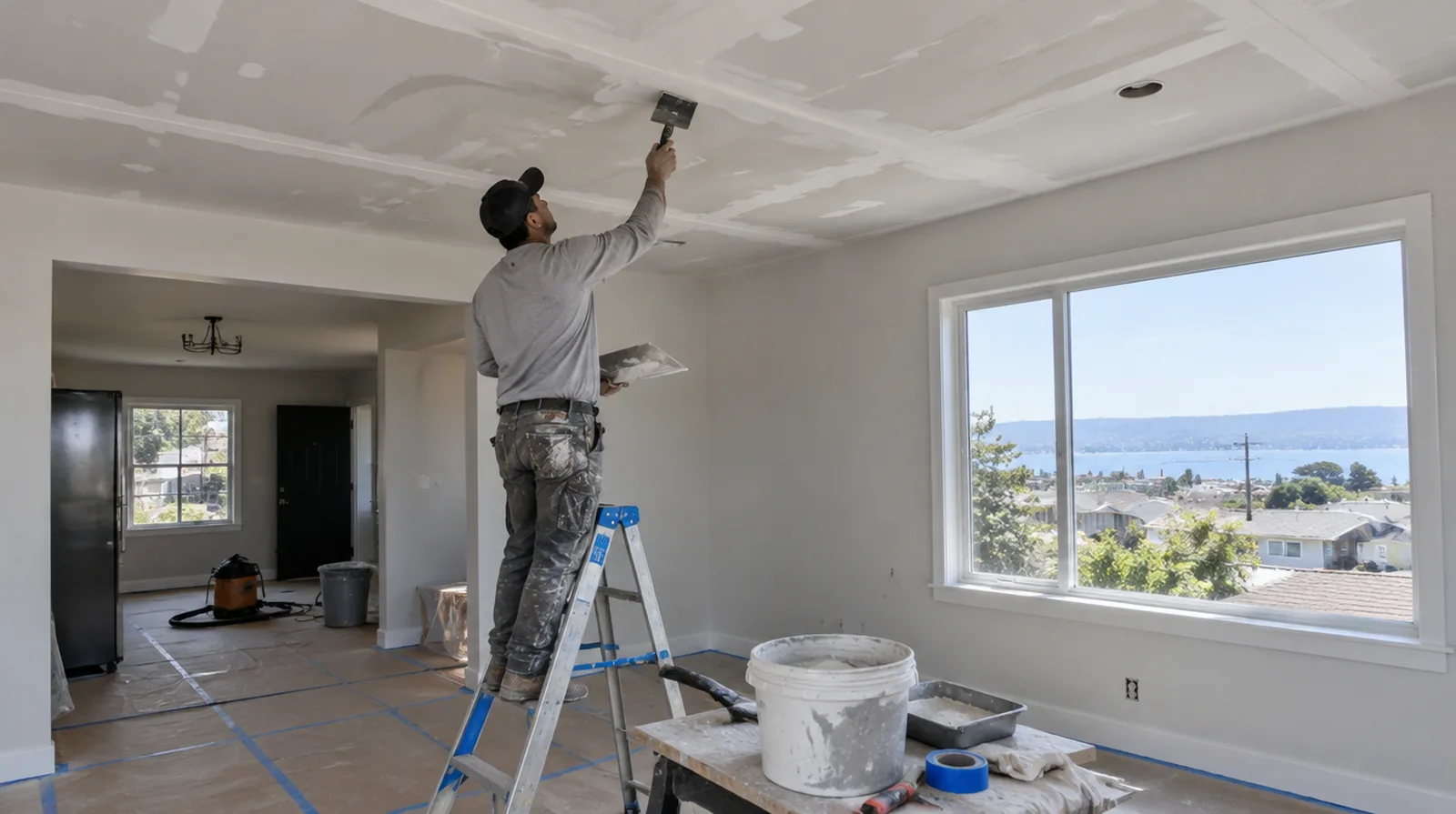
Separate fixtures from board work
Handling lights, sprinkler fittings and air grilles can require appropriate trades and building coordination. Clarify who disconnects and reinstalls anything that interferes with access to the damaged area. If the completion date matters most, allow for intervals between coats as well as active labor rather than assuming the entire process happens continuously.
Plan overhead access
Ceiling height and furniture layout influence the platform and protection needed for safe working access. Delicate floors, bulky furniture and fittings may add more setup work than the patch dimensions suggest. For a wall receiving a decorative covering, provide its preparation requirements early adequate for the drywall finish to support that product.
Project context in Vallejo
Ask whether the finish will be judged in that light. Many Vallejo homes mix original lath and plaster with later drywall additions, so a repair often meets two very different wall surfaces.
Scope questions before finishing
If access passes through a shared space, arrange protection and a delivery route that do not unnecessarily obstruct other occupants.
When more damage could be hidden, ask how any added scope will be documented before extra material is removed or replaced.
When concealed damage is possible, establish how additional findings and any proposed removal will be recorded before the scope changes.
Where a surface has been painted many times, consider whether differences in texture or sheen will require a wider decorative treatment.
If the original finish is unusual, keep a small reference sample or a close photograph to support the discussion about blending and restoration.
Where light reflects along the wall surface, inspect the complete plane instead of limiting the review to the edge immediately next to the repaired section.
For a room with restricted airflow, plan drying conditions alongside dust protection and the comfort of people occupying neighboring spaces.
For an older repair with no clear history, describe when the mark first appeared and whether it has changed through more than one season.
Where a future fixture will be installed, coordinate any required backing while the cavity is accessible rather than reopening the completed wall.
When a wall has repeated defects, keep a record of earlier repair attempts so a new assessment does not simply repeat an unsuccessful approach.
If there is a fixed move in date, reserve adequate time for the coating stages after drywall work rather than counting only the installation period.
When the work area includes a doorway, check the clearance for panel movement as well as the amount of space available for finishing tools.
Explore the Vallejo drywall overview for related options, or read the project planning information before arranging the next stage.
More planning details for Vallejo
Check whether the patch area sits on plaster, board, or a transition between them before choosing materials. Bay air keeps some rooms cool and damp through winter, which slows compound drying more than people expect. On sloped streets, plan where a truck can stop and how full sheets reach the front door without crossing a wet lawn.