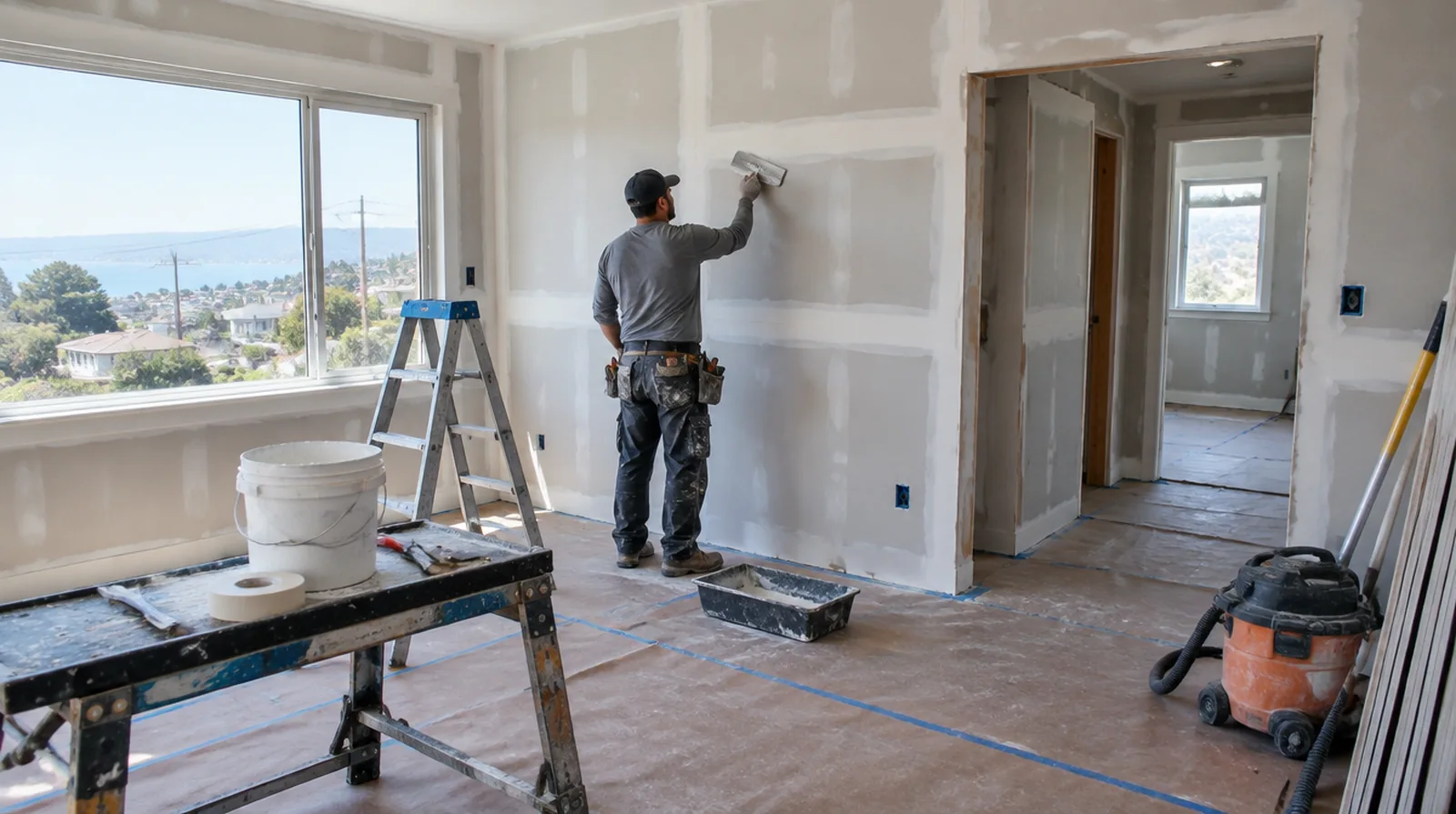
Identify the cause
A dent from moving furniture calls for a different repair than a joint that repeatedly opens beside a door. Describe any change in the defect and check whether the surrounding board is still stable. If the space will remain occupied, identify a practical separation between the project space and the space that still needs daily access.
Feather beyond the opening
The visible finishing area typically extends farther than the hole because a gradual taper hides the repair edge. A broad blend reduces the ridge that otherwise appears when light travels across the wall surface. Where a surface has been painted many times, consider whether differences in texture or sheen will require a wider decorative treatment.
Document recurring movement
A crack that repeatedly reappears might need the cause investigated before more cosmetic work. A drywall estimate should state when another trade needs to investigate before surface work proceeds. If the coating stability is unclear, assess which layers are adequately bonded and which ought to be removed instead of simply hidden beneath new material.
Build thin finishing coats
Shaping a repair through thinner coats gives more control than depositing all the material at once. Judge the previous layer only after it has dried enough for the next operation. For a project with several trades, agree which inspection or handover point must happen before the next person starts work.
Protect adjacent surfaces
Fine gypsum dust can travel beyond the immediate patch unless floors and nearby furnishings are protected. The work plan should identify what needs moving and which room can remain in use. Before comparing two proposals, check that both include the same protection, finishing and cleanup boundaries rather than comparing totals alone.
Handle small fastener marks
A visible screw or nail bump can indicate movement between the board and its supporting framing. Correct the fastening condition as needed before covering the mark with a new finishing coat. Where the quoted work stops before painting, request a clear description of what remains so the next decorating stage can be priced realistically.
Review with side lighting
Use an angled view as well as a direct view when reviewing a finished patch. Window light may reveal a contour that ordinary room lighting hides, while decorative paint sheen creates a separate issue. Where a future fixture will be installed, coordinate any required backing while the cavity is accessible instead of reopening the completed wall.
Set the paint boundary
Even a well blended patch can remain visible when touched up with an aged or unavailable paint color. Repainting the full wall from corner to corner may give a more consistent appearance. At an edge beside built in furniture, state whether the obstruction will be removed or whether finishing stops at the section that can be reached.
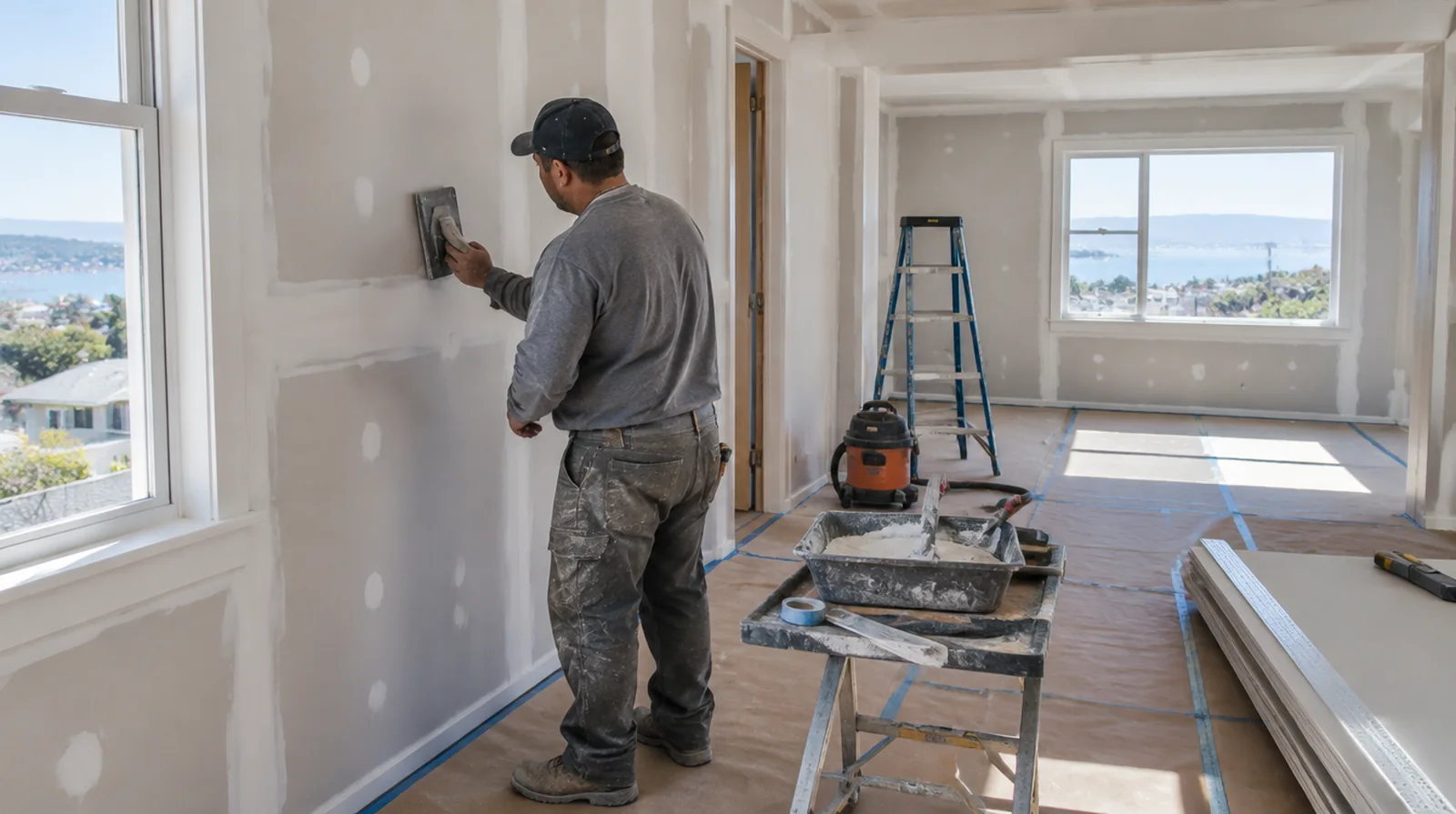
Choose the patch boundary
Loose paper and crumbling gypsum must be removed until the surrounding panel can support a durable repair. A tidy rectangular cut often provides stronger backing than following an irregular broken edge. If the surface condition is uncertain, allow for an assessment that can distinguish stable material from layers that ought not to be covered.
Support the replacement
A substantial hole is normally rebuilt with board and proper support, not filled entirely with finishing material. Use a replacement that aligns with the original panel face before attempting to blend the joints. For a wall receiving a decorative covering, provide its preparation requirements early sufficient for the drywall finish to support that product.
Project context in Vallejo
Check whether the patch area sits on plaster, board, or a transition between them before choosing materials. Older homes may also hide cloth-covered wiring behind walls, which should be looked at by an electrician before a cavity is closed.
Scope questions before finishing
Where a surface has been painted many times, consider whether differences in texture or sheen will require a wider decorative treatment.
For a room with restricted airflow, plan drying conditions alongside dust protection and the comfort of people occupying neighboring spaces.
For a surface that will receive wall covering, share the product requirements early so the finishing stage supports the planned decorative treatment.
When photographs are used for an initial discussion, include a wide room view as well as a close view so scale and surrounding finishes are understandable.
For work spread across different planes, record their dimensions separately and describe the boundary of the treatment on each surface.
When comparing competing estimates, make sure their protection, surface finish and disposal allowances describe equivalent work before comparing the final prices.
Where the wall surface meets fixed furniture, clarify whether removal is included or whether the finish will terminate at the accessible edge.
For a wall receiving a decorative covering, provide its preparation requirements early enough for the drywall finish to support that product.
While a removed panel exposes the wall cavity, complete the necessary review of concealed work before replacement board closes the opening.
Where the quoted work stops before painting, request an explicit description of what remains so the next decorating stage can be priced realistically.
Before comparing two proposals, check that both include the same protection, finishing and cleanup boundaries rather than comparing totals alone.
If occupancy must resume on a certain day, include the later primer and paint stages in the timetable as well as drywall installation and finishing.
Explore the Vallejo drywall overview for related options, or read the project planning information before arranging the next stage.
More planning details for Vallejo
Many Vallejo homes mix original lath and plaster with later drywall additions, so a repair often meets two very different wall surfaces. Bay air keeps some rooms cool and damp through winter, which slows compound drying more than people expect. On sloped streets, plan where a truck can stop and how full sheets reach the front door without crossing a wet lawn.