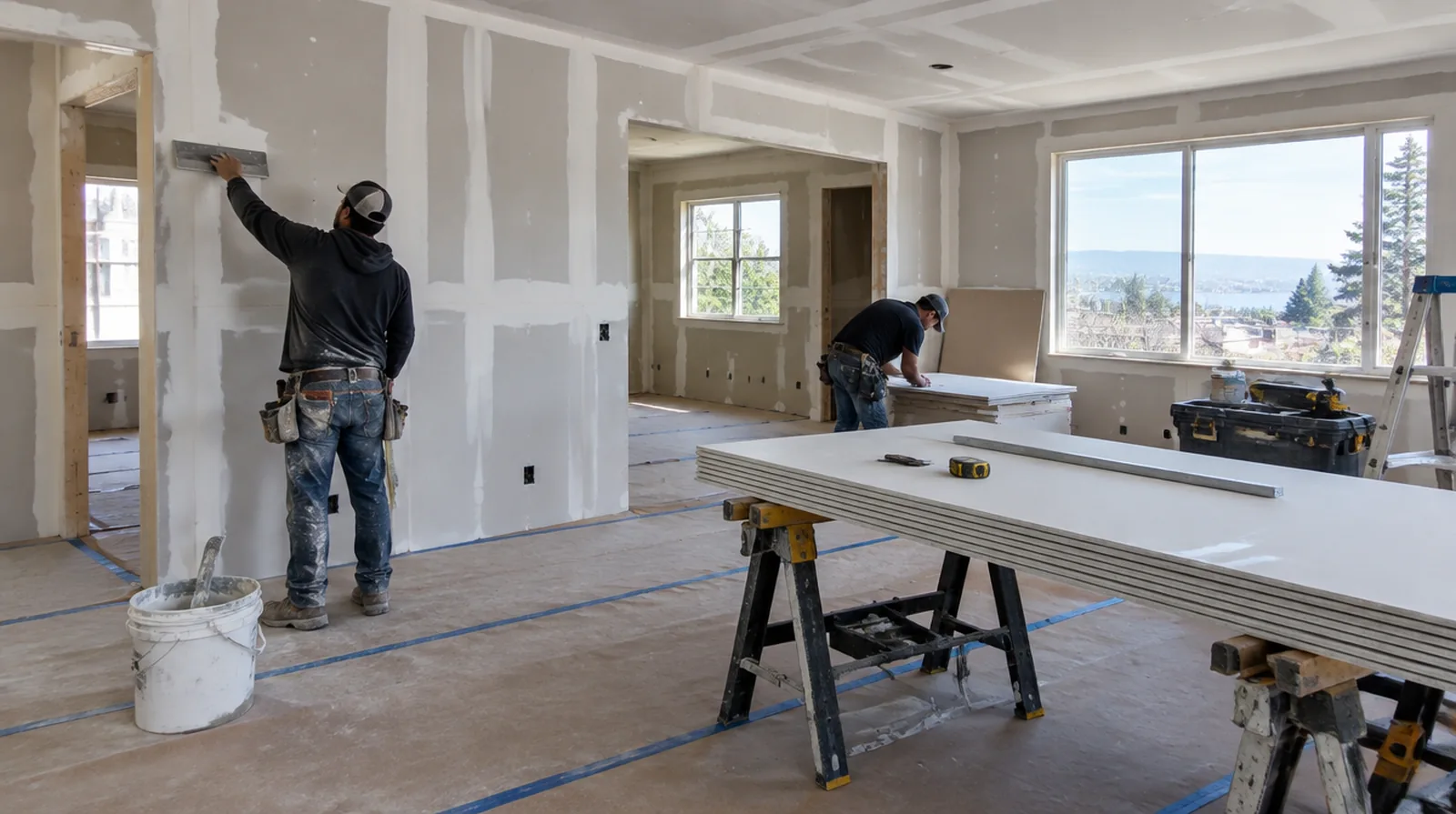
Review assembly requirements
The required performance of a commercial wall affects its framing details and gypsum layers. Use the specified assembly rather than assuming a single standard panel suits every partition. If occupancy must resume on a certain day, include the later primer and paint stages in the timetable as well as drywall installation and finishing.
Specify the visible finish
Choose the finishing standard according to each commercial room and its visible lighting conditions. Set the expected appearance before decoration so prominent spaces are not assessed as though they were storage areas. If occupancy must resume on a certain day, include the later primer and paint stages in the timetable as well as drywall installation and finishing.
Sequence concealed trades
Allow concealed services to be installed and checked before enclosing the partitions. A coordinated readiness check reduces avoidable openings through newly installed drywall. Where the wall meets fixed furniture, clarify whether removal is included or whether the finish will terminate at the accessible edge.
Coordinate approvals
Building management and local requirements may affect working hours, deliveries and inspection milestones. Identify which consents and project information the client or design team must provide. Where the quoted work stops before painting, request an explicit description of what remains so the next decorating stage can be priced realistically.
Define the tenant scope
A commercial partition project needs an explicit plan for room layout, access and the intended use of each space. Separate owner responsibilities from tenant responsibilities so the proposal covers a defined package of work. For a project with several trades, agree which inspection or handover point must happen before the next person starts work.
Lay out doors and glazing
Set out openings with the dimensions and support needed by their specified doors and glazing. Coordination with door and glazing installers helps keep the finished lines consistent. If the current finish is unusual, keep a small reference sample or a close photograph to support the discussion about blending and restoration.
Close out with clear limits
A final walk through should distinguish drywall corrections from paint, flooring and other trade work. Document any remaining items and the agreed handover condition before the work area is released. If the problem developed after another renovation, explain which nearby materials or building systems changed before the damage became noticeable.
Manage occupied areas
Dust protection and a defined work boundary are important when nearby rooms remain in use. Set noise and daily cleanup expectations in relation to the activities that will continue nearby. Where flooring is staying in place, agree on protective coverings and check that tools and material handling will not damage the visible finish.
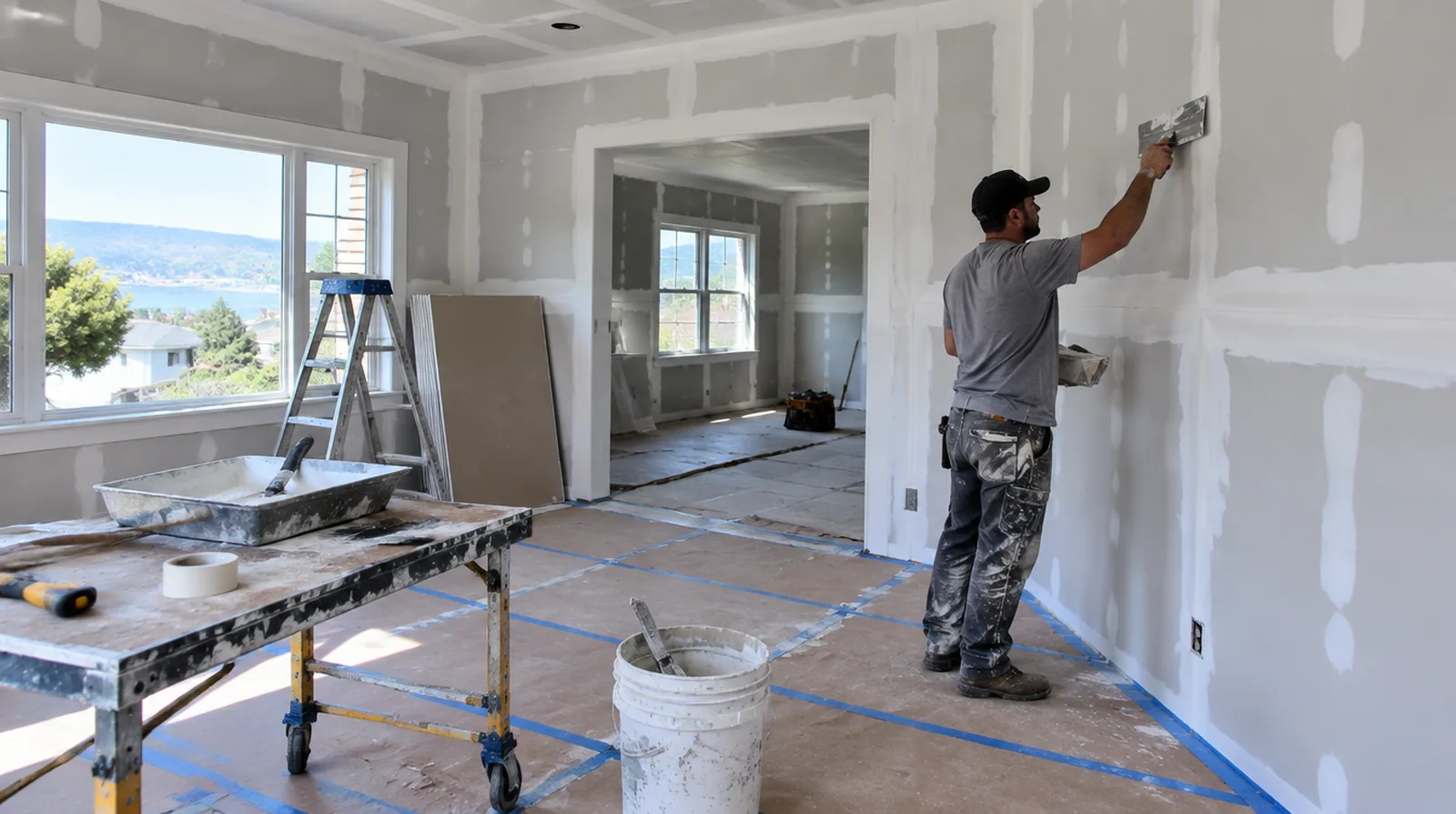
Schedule inspection stages
Some checks need to happen before board installation while others occur after joints are complete. Give the responsible reviewer an opportunity to check before installation or finishing conceals the detail. When damage followed other building work, describe the nearby alterations and the sequence between those changes and the first noticeable defect.
Plan material movement
Long corridors, shared lifts and limited storage can affect sheet sizes and delivery timing. The material handling plan should protect common spaces as well as the room where installation occurs. If the completion date matters most, allow for intervals between coats as well as active labor rather than assuming the entire process happens continuously.
Project context in Vallejo
Ask whether the finish will be judged in that light. Check whether the patch area sits on plaster, board, or a transition between them before choosing materials.
Scope questions before finishing
When a wall has repeated defects, keep a record of earlier repair attempts so a new assessment does not simply repeat an unsuccessful approach.
Where the quoted work stops before painting, request a well defined description of what remains so the next decorating stage can be priced realistically.
For a surface carrying numerous paint layers, discuss whether differences in the retained profile or sheen justify decorating a broader area.
At a repair beside an opening, allow clearance for moving board through the doorway and space to use the finishing tools effectively.
At an edge beside built in furniture, state whether the obstruction will be removed or whether finishing stops at the section that can be reached.
When a paint contractor follows the drywall work, define the surface condition being handed over and decide who handles any minor final touch ups.
Where a surface has been painted many times, consider whether differences in texture or sheen will require a wider decorative treatment.
If occupancy must resume on a certain day, include the later primer and paint stages in the timetable as well as drywall installation and finishing.
If the original finish is unusual, keep a small reference sample or a close photograph to support the discussion about blending and restoration.
If the wall surface work belongs to a broader renovation, coordinate its order with flooring, cabinetry and trim rather than scheduling finishing in isolation.
For a project involving a building manager, confirm access hours and protection requirements before promising a start date or a short completion window.
For an older repair with no clear history, describe when the mark first appeared and whether it has changed through more than one season.
Explore the Vallejo drywall overview for related options, or read the project planning information before arranging the next stage.
More planning details for Vallejo
Many Vallejo homes mix original lath and plaster with later drywall additions, so a repair often meets two very different wall surfaces. Bay air keeps some rooms cool and damp through winter, which slows compound drying more than people expect. On sloped streets, plan where a truck can stop and how full sheets reach the front door without crossing a wet lawn.